

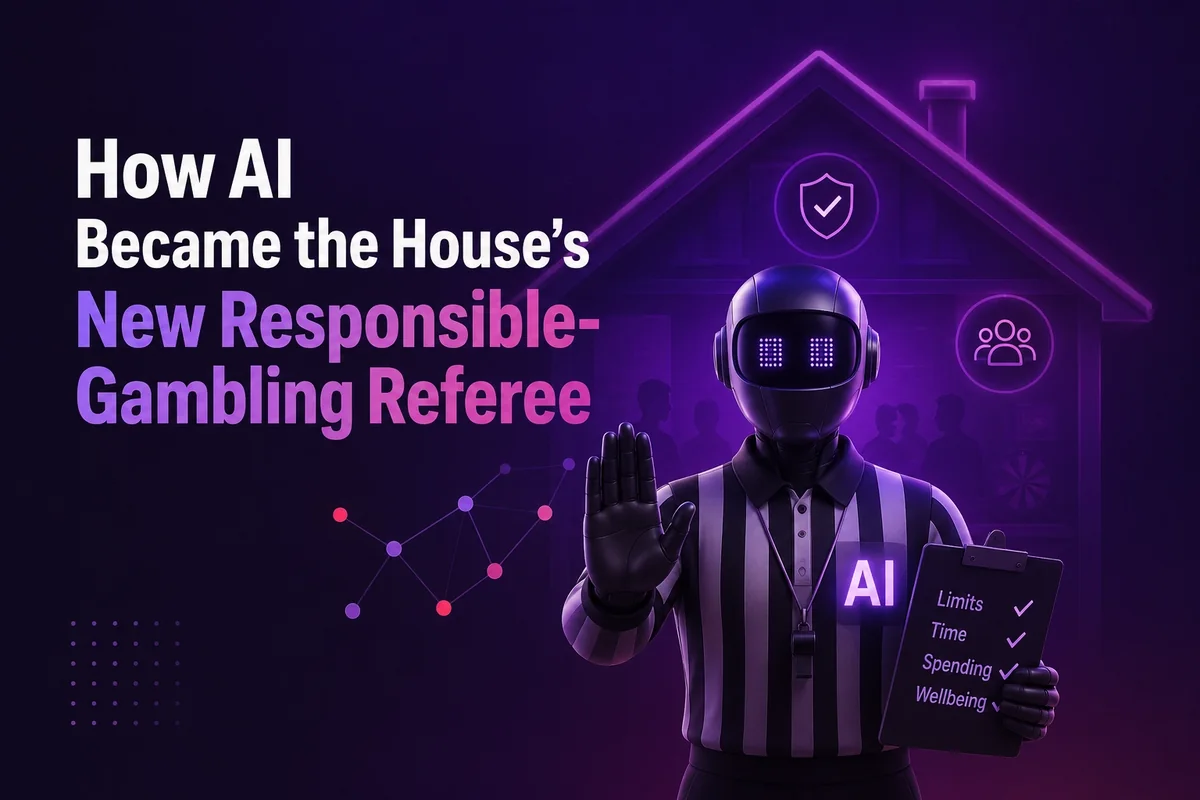
The casino has always watched you. Loyalty tiers, "we miss you" emails, the bonus that lands the moment you drift toward the cash-out button: operators have tracked player behaviour for decades. What's new in 2026 is what they're now expected to do with all that data. Not just keep you playing, but spot when you're in trouble and step in before it becomes a crisis.
From pilot project to near-mandatory
For a few years, AI-driven responsible-gambling tools were the industry's favourite pilot scheme, announced with fanfare, quietly shelved, occasionally revived. That's changed. Across the major regulated markets, these systems have moved from optional experiment to something close to a requirement. The UK Gambling Commission, the Dutch KSA and a growing list of US state regulators now expect licensed operators to monitor for harm in real time, not to file a tidy report after the damage is already done.
The timing lines up with everything else. The UK's affordability-check framework began rolling out in early 2026, and AI monitoring is the engine that makes those checks workable at scale. You can't put a human behind every account. You can have a model flag the handful that need a closer look.
What the machines are actually looking for
Strip away the jargon and these systems watch for a short list of tell-tale patterns. Deposits that climb fast, session after session. Bets that get bigger right after a loss, the classic signature of chasing. Sessions that run far longer than a player's normal rhythm, or 4am logins that break the usual pattern. Rapid deposit-decline-redeposit loops.
When a model spots one, it doesn't just log it. It triggers something: a reality check telling you how long you've been playing, a nudge to set a deposit limit, or in sharper cases an offer to take a break or self-exclude. The better implementations act in the moment, while you're still at the table, rather than emailing you a leaflet next week.
No model is perfect, and the honest operators know it. A big night that is genuinely a one-off can look almost identical to the first slide into a problem, so a well-built system aims to prompt rather than punish: a question, a limit suggestion, a pause, not an instant account freeze. The goal is to catch the person heading for trouble without nagging everyone who is simply having a good Saturday.
| Behaviour the model flags | Typical automated response |
|---|---|
| Deposits rising fast over days | Deposit-limit prompt |
| Bigger bets straight after losses | Reality check or cool-down nudge |
| Unusually long or very late sessions | Session-time warning |
| Repeated declined-then-retry deposits | Affordability flag or account review |
A safety net with a surveillance problem
Here's where I land after testing a lot of these systems: they're genuinely useful, and they're not free of cost. On the plus side, a model that catches loss-chasing at 2am and puts a limit prompt in front of someone is doing something no human moderator could at that hour. For players sliding toward harm without noticing, that's a real safety net.
The cost is data. To spot those patterns, the house is now profiling your financial behaviour in fine detail: every deposit, every bet, every session, cross-referenced and scored. It's protective surveillance, but it's still surveillance, and "we're doing it for your safety" is a sentence worth staying slightly suspicious of. Who holds that data, for how long, and who else gets to see it are all fair questions to keep asking.
There's a subtler problem, too. Responsible-gambling messaging doesn't always work the way it's meant to. Research has found that some safer-gambling adverts actually made people more confident rather than more cautious. In one survey, around 63% of people said the messaging left them feeling more assured about their gambling, the opposite of the intent. A pop-up can become wallpaper. If the industry treats AI nudges as a box ticked rather than something that has to genuinely change behaviour, it risks building a safety net with a hole in the middle.
Weighing the upside against the cost
It helps to hold both truths at once. These systems prevent real harm, and they do it by watching you closely. Neither fact cancels the other. Here is the trade-off laid out plainly, so you can decide how much weight to give each side.
| The upside | The cost to weigh |
|---|---|
| Catches loss-chasing at 3am, when no human is watching | Requires detailed, ongoing profiling of your finances |
| Nudges arrive in the moment, not in a letter next week | Raises fair questions about who holds the data and for how long |
| Makes affordability checks workable at scale | Can be treated as a box ticked rather than a genuine safeguard |
| Flags the few accounts that need a closer look | Repeated pop-ups can fade into wallpaper and stop landing |
Use it as a backstop, not a babysitter
AI monitoring is a supplement to the controls you set yourself, not a substitute for them. Treat a well-timed reality check as a prompt to actually stop and think, and don't assume that no warning means everything is fine. The limits you choose before you start playing will always protect you better than an algorithm reacting after the fact.
The tools are improving fast, and on balance that's good news. But they work best as a backstop to limits you set for yourself. If you want to stay in control on your own terms, our responsible gambling guide walks through the deposit limits, cool-off periods and self-exclusion schemes every licensed site must offer. And if you play in Britain, our UK casino reviews flag which operators take player protection seriously rather than treating it as a compliance chore.
FAQ
What is AI actually monitoring when I play?
Patterns, not moral judgements. It watches for deposits climbing fast, bets that grow right after a loss, sessions that run far longer or later than your norm, and repeated declined-then-retry deposits. Those behaviours are the ones most strongly linked to harm, so they are what the models are tuned to notice.
Can the system freeze my account on its own?
Most responses are gentle by design: a reality check, a nudge to set a limit, an offer to take a break. Harder action such as an account review tends to follow clearer signals, like repeated failed deposits. Good operators prompt first and reserve freezes for genuine red flags.
Is all this monitoring a privacy risk?
It is a fair concern. To spot harm the house profiles your financial behaviour in detail, which is protective but still surveillance. Reasonable questions to ask any operator are who holds the data, how long they keep it, and who else can see it. A licensed site should have clear answers.
Do these safer-gambling nudges actually work?
Sometimes, and not always as intended. Research has found some safer-gambling messaging left people feeling more confident rather than more cautious, with around 63% in one survey reporting exactly that. A pop-up can become wallpaper. The nudges help most when you treat them as a real prompt to stop and think.
Should I rely on AI to keep me safe?
No. Treat it as a backstop, not a babysitter. The limits you set before you start playing will always protect you better than an algorithm reacting after the fact, and no warning does not automatically mean everything is fine.
Which regulators expect this now?
Real-time harm monitoring has moved from optional to near-mandatory across major regulated markets, including the UK Gambling Commission, the Dutch KSA and a growing list of US state regulators. The direction is clear: spot harm as it happens rather than filing a report once the damage is done.
Play responsibly
No algorithm can decide your limits for you. Gambling should be fun, never a way to make money or chase losses. If it stops feeling like entertainment, set a deposit limit, take a break or self-exclude through the tools every licensed casino provides. Help is always available. 18+ only.